
When does Novacula make sense?
Managed RPC is useful when you need quick blockchain access without operating nodes.
Traditional self-hosting gives you more control, but your team must handle deployment, monitoring, updates and recovery across different chains and tools.
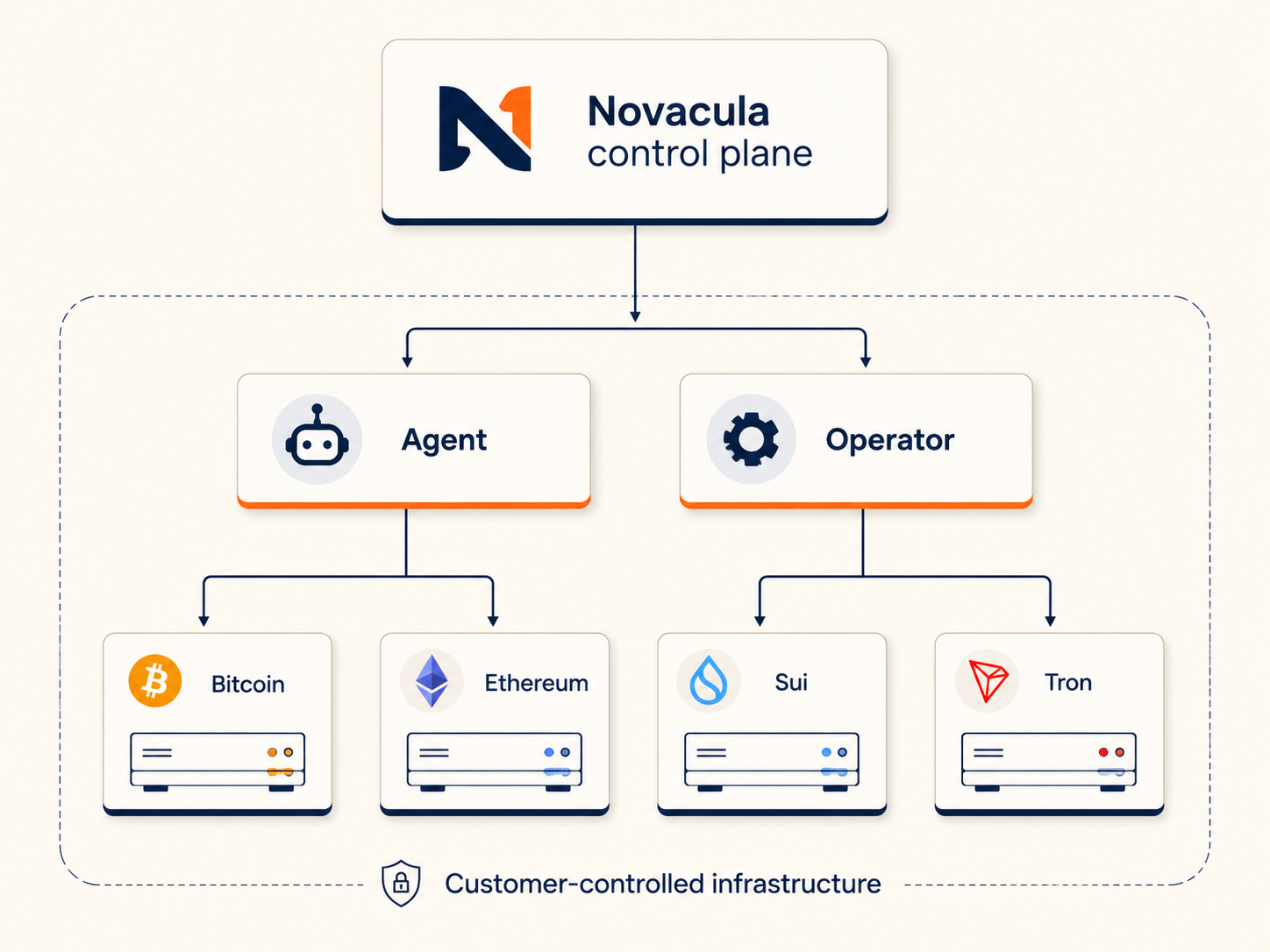
Novacula sits between these models. You control the infrastructure, while Novacula manages supported operational tasks.
The Agent runs nodes on UNIX-based hosts and VMs. The Operator runs them in Kubernetes.
Who is Novacula built for?
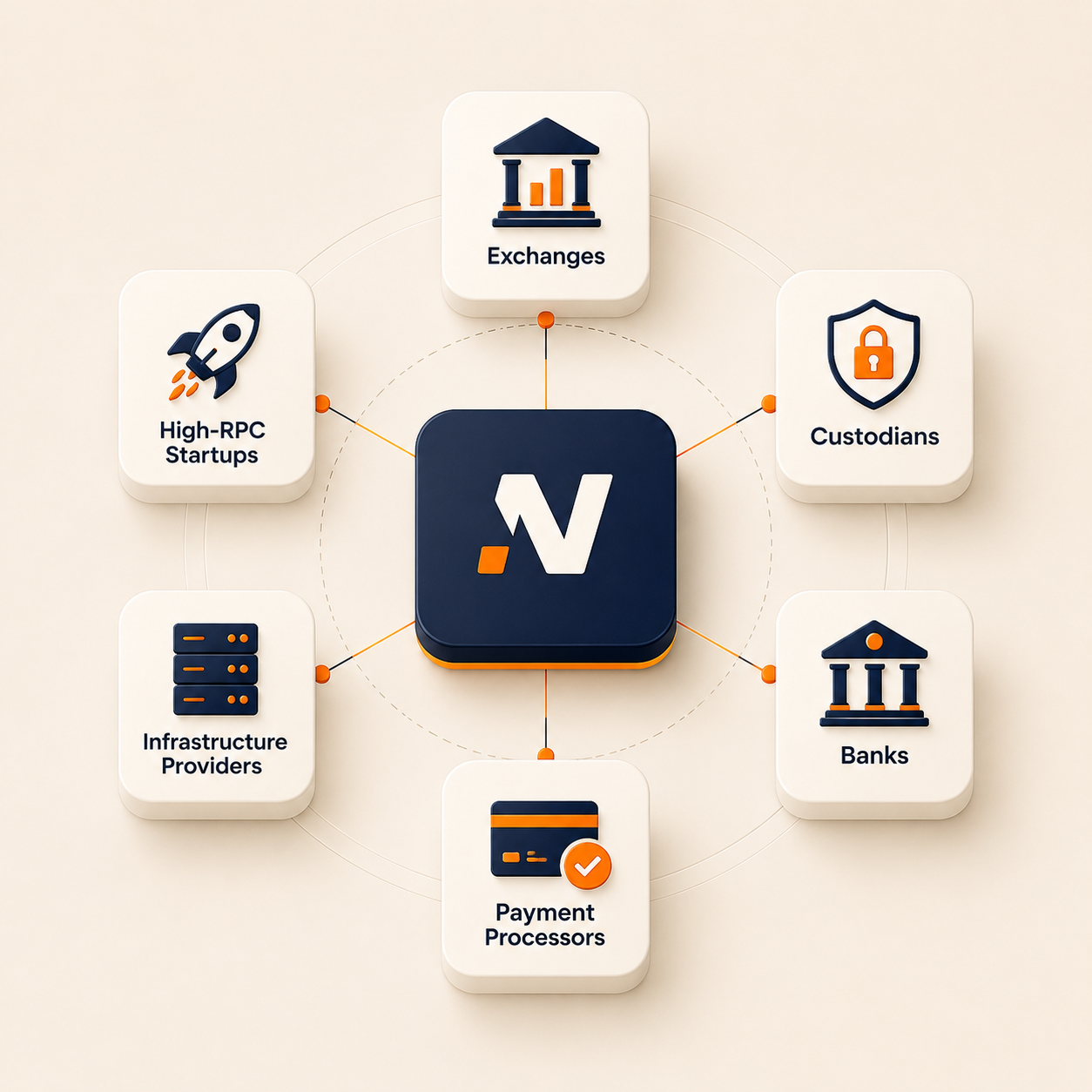
| Company type | Main reason to run nodes |
| Exchanges | Deposits, withdrawals and transaction monitoring |
| Custodians | Balance verification and address monitoring |
| Banks | Infrastructure control and internal security requirements |
| Payment processors | Payment detection, confirmation tracking and transaction broadcasting |
| Infrastructure providers | Managing several chains, clients and node fleets |
| High-RPC startups | Predictable capacity and more control over production infrastructure |
Exchanges
An exchange depends on blockchain nodes to monitor deposits, broadcast withdrawals and track transaction status.
As the number of supported chains grows, your team may need more control over node versions, capacity, endpoint access and infrastructure location.
Novacula lets you run supported nodes on infrastructure you choose while managing them through one control plane. Your team can monitor sync status, health, resource use and logs without maintaining a separate operating process for every chain.
You can still keep an external RPC provider for backup or unsupported chains.
Custodians
A custodian needs reliable blockchain data to verify balances, monitor addresses and track transactions for client assets.
The nodes behind these processes may need to remain inside an approved infrastructure environment. Your team may also need clear control over access and operational changes.
With Novacula, RPC traffic, private keys and blockchain data remain on your hosts. The control plane receives operational information such as node status, sync health, resource use and selected logs.
Novacula manages node infrastructure. It does not replace custody systems, key management or internal security controls.
Banks
Banks working with digital assets, tokenized products or blockchain settlement often need more control than a standard external endpoint provides.
Your teams may need to know:
- Where the node runs
- Which client and version it uses
- How RPC access is exposed
- What information leaves the environment
- Who can apply operational changes
Novacula runs supported nodes inside infrastructure selected by the bank.
The control plane can be hosted by Novacula or deployed inside the customer’s environment under an Enterprise plan.
This can support internal infrastructure and security requirements, but it does not provide automatic regulatory compliance.
Payment processors
A payment processor needs blockchain nodes to detect incoming payments, track confirmations and broadcast outgoing transactions.
As payment volume grows, RPC performance becomes part of the payment flow. Capacity limits or unstable access can affect payment monitoring and transaction processing.
Novacula lets you run supported nodes on infrastructure sized for your workload. It manages supported deployment, monitoring, alerts and lifecycle actions while you control the servers and endpoint access.
External RPC providers can still be used for temporary capacity, backup or additional chains.
Infrastructure providers
Infrastructure providers often manage several node clients, versions and networks at the same time.
Without a shared operating model, your team may need different scripts, dashboards and processes for every chain.
Novacula provides one control plane for supported deployment, monitoring, metrics, logs, alerts and lifecycle management.
This can support:
- Node and RPC providers
- Staking operators
- Blockchain foundations
- Protocol teams
- Companies operating blockchain infrastructure for customers
Traditional self-hosting may still be necessary when you need a chain, client, version or configuration that Novacula does not support.
Startups with high RPC usage
A startup usually does not need to operate its own nodes from the beginning.
Managed RPC is often the simplest option during development and early growth. It gives your team immediate blockchain access without adding infrastructure work.
Novacula becomes more relevant when RPC demand is steady and infrastructure decisions begin to affect capacity, cost or reliability.
It may be time to consider Novacula when:
- Your product depends on blockchain access every day
- You need more control over node versions or configuration
- You want baseline capacity on your own infrastructure
- You support several chains
- You do not want to build separate monitoring and deployment systems
- You want an external provider as backup rather than your only source
There is no universal traffic or spending threshold. The right point depends on your workload, chains, redundancy requirements and engineering capacity.
Who uses Novacula inside a company?
Novacula supports both technical teams and business decision-makers.
Technical teams
DevOps engineers, site reliability engineering (SRE) teams, platform engineers and infrastructure leads focus on:
- Deployment options
- Supported chains and clients
- Resource requirements
- Sync and health monitoring
- Logs, metrics and alerts
- Updates and hard forks
- RPC access
- Recovery and availability
If the control plane becomes unavailable, existing nodes continue running and serving RPC. New deployments and operational changes resume when the executor reconnects.
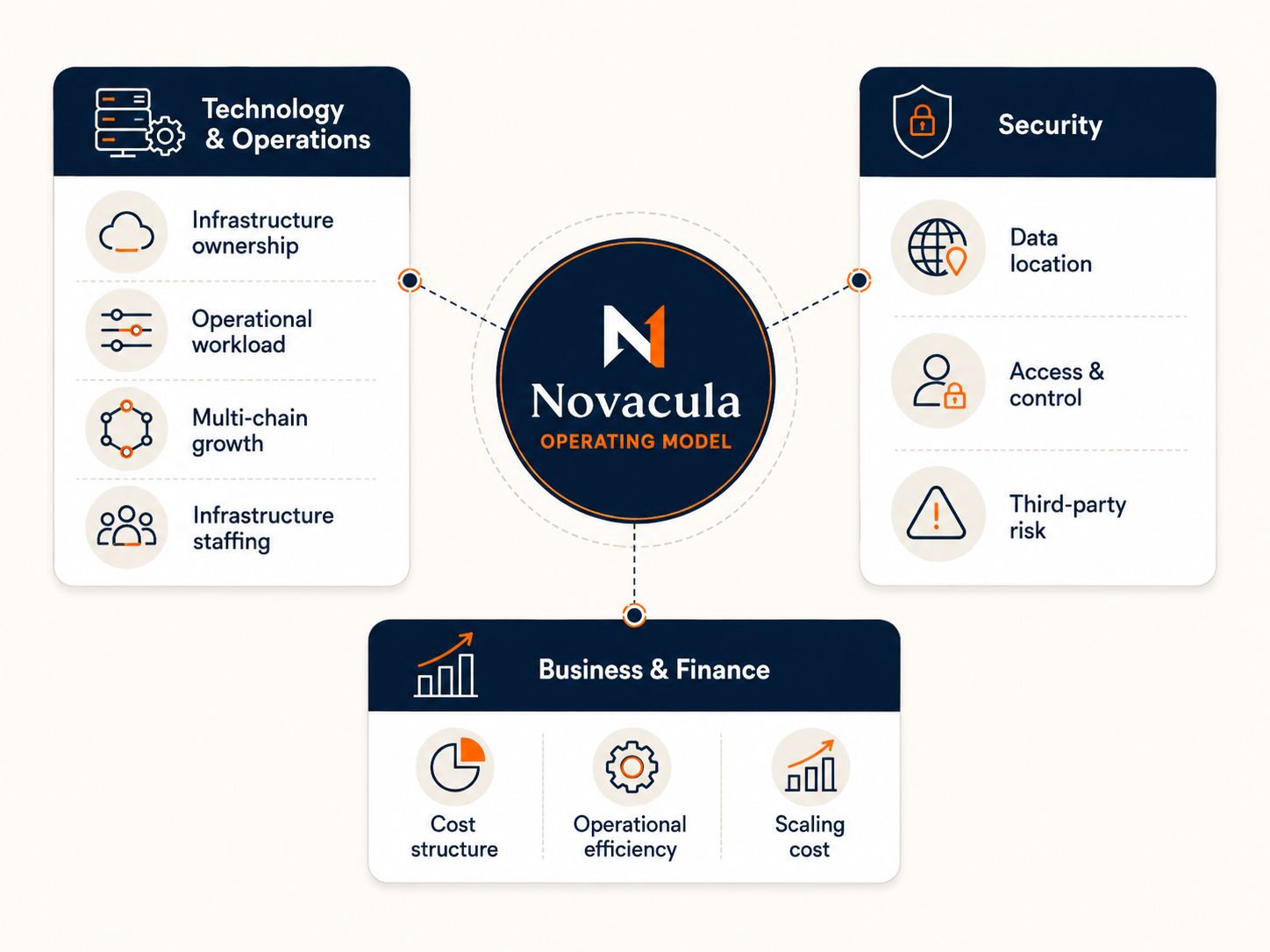
Business and security considerations
Different stakeholders evaluate blockchain infrastructure from different perspectives.
Technology and operations leaders usually focus on:
- Infrastructure ownership
- Operational workload
- Growth across more chains
- The need for additional infrastructure staff
Security leaders usually focus on:
- Data location
- Infrastructure access and control
- Third-party risk
Business and finance leaders usually focus on:
- Cost structure
- Operational efficiency
- The cost of scaling infrastructure
The product needs to answer all of these concerns: how the infrastructure works, who controls it, and what the operating model means for security, cost and growth.
When is Novacula not the right fit?
Novacula may not be the right option when you need only occasional RPC access and do not want to manage infrastructure.
It may also not fit when your required chain, client, version or configuration is not supported.
Novacula manages supported node operations. Your team still manages the underlying servers, network policy, security, capacity and application integration.
Frequently asked questions
Is Novacula only for large companies?
No. You can begin with one supported node. The main question is whether you need the node to run on infrastructure you control.
Is Novacula a managed RPC provider?
No. A managed RPC provider operates the node infrastructure for you. Novacula manages supported nodes running on your infrastructure.
Do I need Kubernetes?
No. The Agent runs on UNIX-based hosts and VMs. The Operator is for Kubernetes environments.
Can I keep my current RPC provider?
Yes. You can use an external provider for backup, temporary capacity or unsupported chains.
What information does Novacula receive?
The executor sends operational information such as status, sync health, resource use and selected logs. RPC traffic, private keys and blockchain data remain on your hosts.