Node Ops without the Pager.
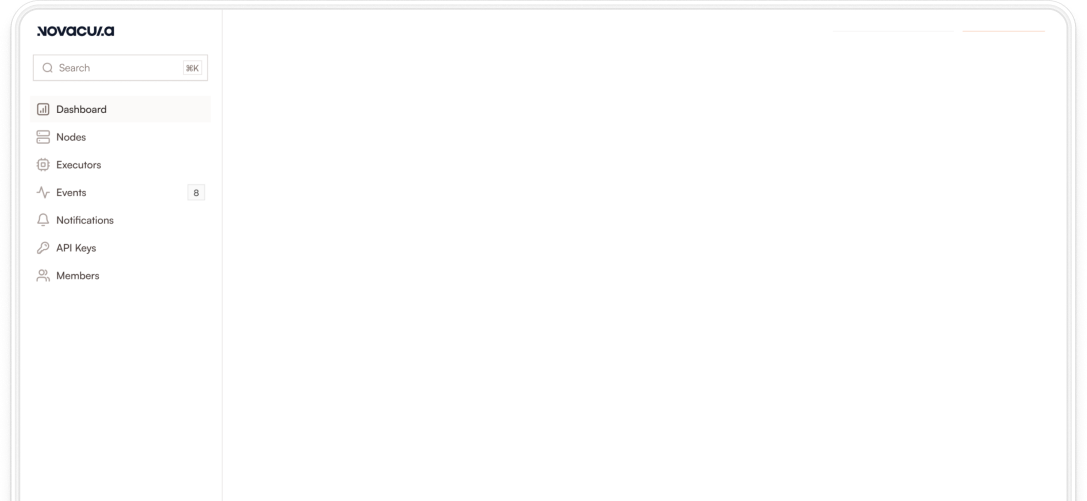
Novacula deploys, monitors, and manages blockchain nodes on your infrastructure. You keep control of the infrastructure while Novacula handles the operational workflow.
Runs where you already run.
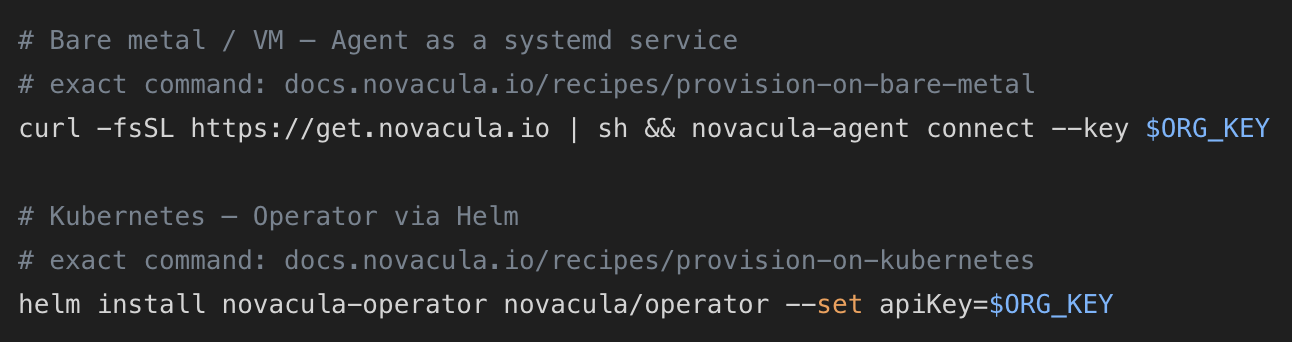
A single Agent binary for Linux hosts and VMs (systemd), a Helm-installed Operator for Kubernetes. Same control plane, same workflow, mixed fleets welcome.









One control plane for every node you run.
Novacula deploys, monitors, and manages blockchain nodes on your infrastructure. You keep control of the infrastructure while Novacula handles the operational workflow.
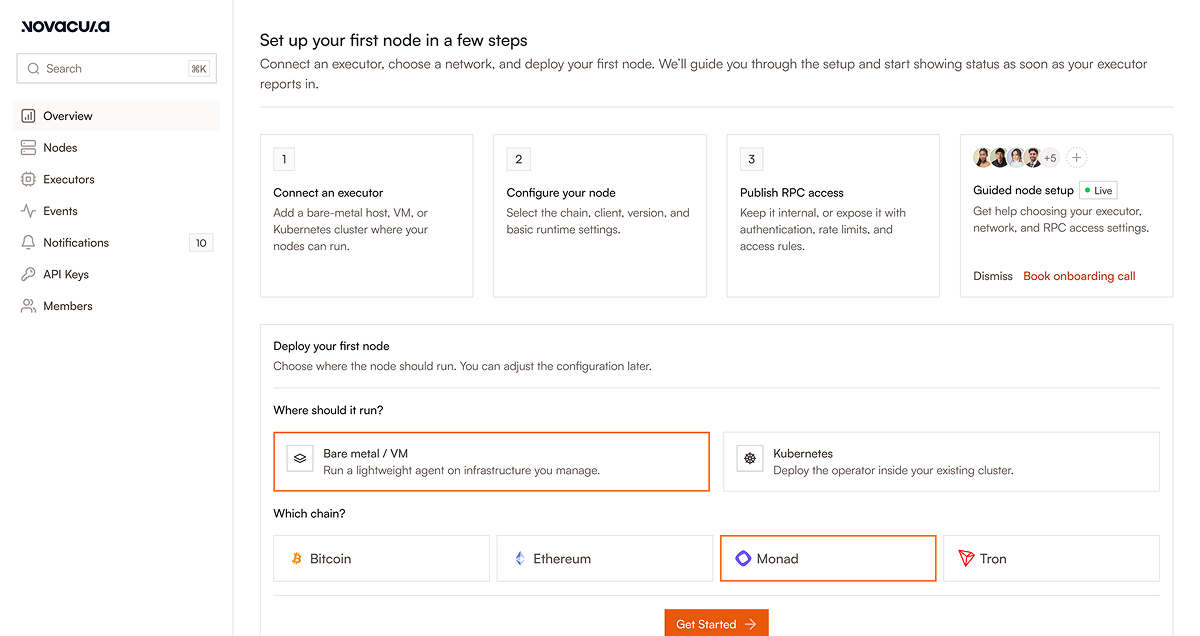
Deploy nodes across supported chains from one place.
Deploy blockchain nodes through one workflow: choose the chain, network, supported node type, and client options. Novacula handles the chain-specific binaries, configuration, ports, and resource defaults behind the deployment process.
- One interface for EVM and non-EVM networks
- Chain-specific node types, clients, and configurations
- Bare metal, virtual machines, or Kubernetes where supported

See every node. Catch drift before production does.
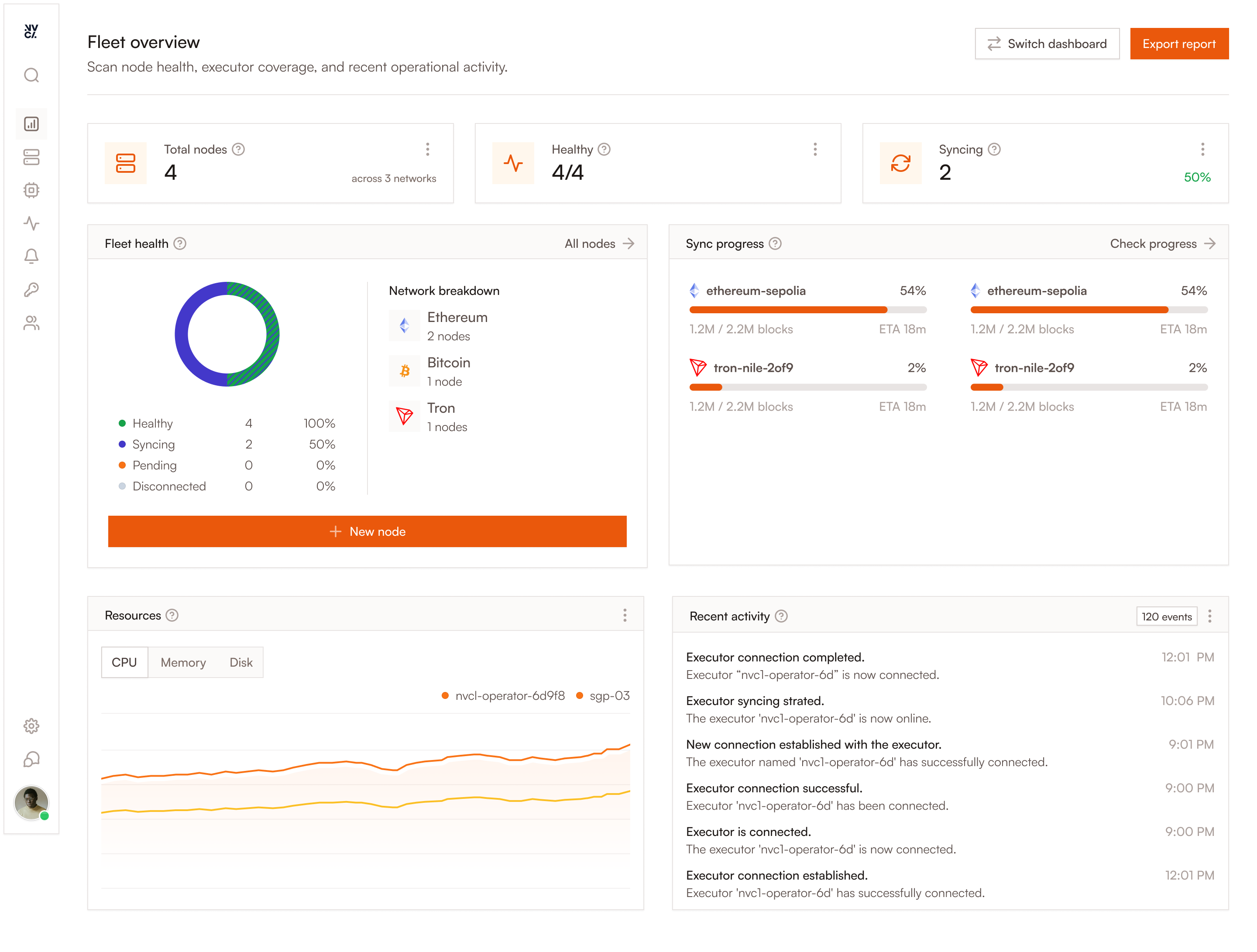
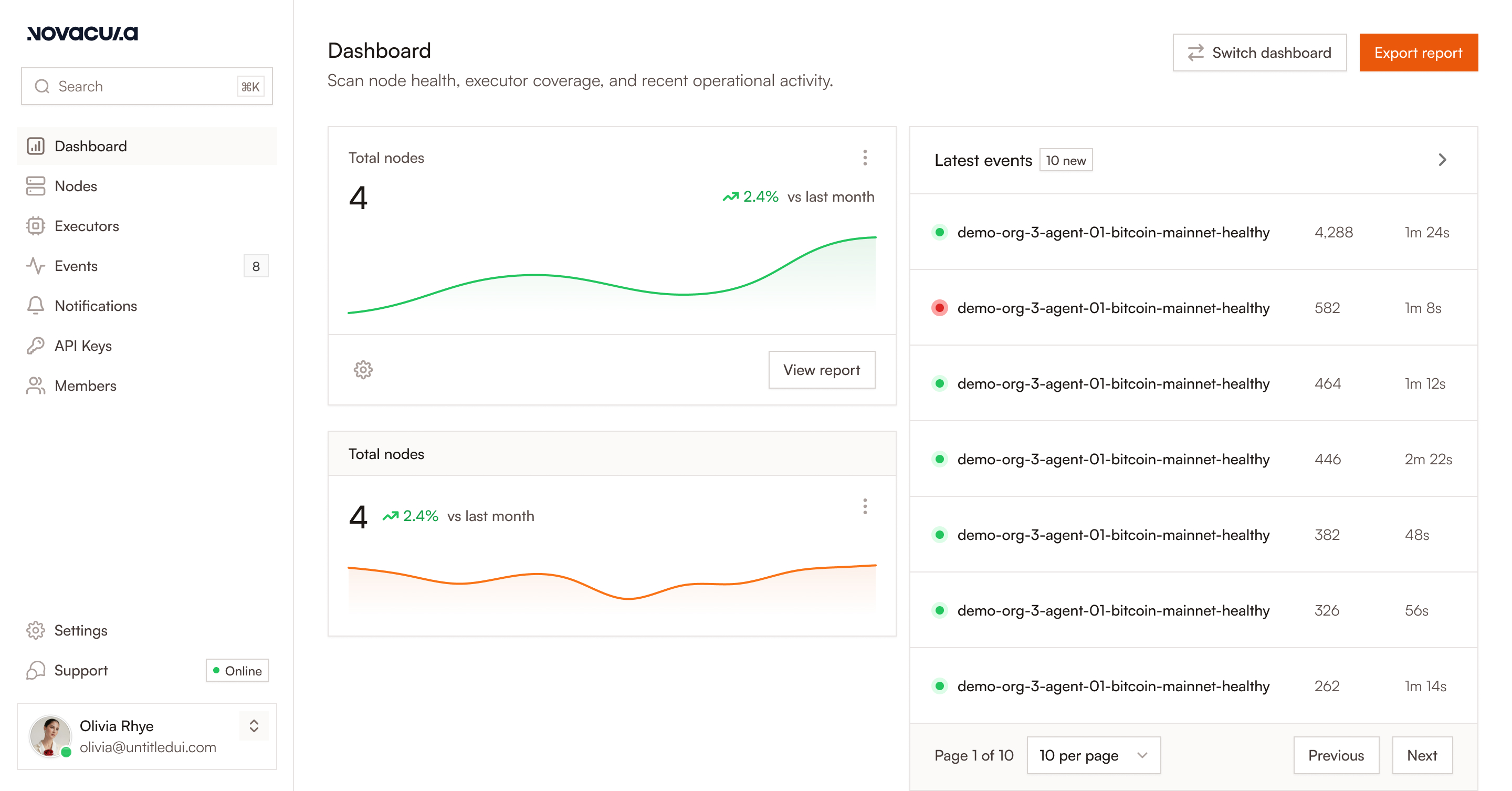
Monitor nodes and executors from one control plane, including sync status, block-height progress, resource usage, events, and available logs. Use operational signals to spot unhealthy or drifting nodes before they affect production.
- Live fleet overview and events feed
- Node health, sync, and resource visibility
- Operational metrics and logs in one control plane
Lifecycle management and recovery
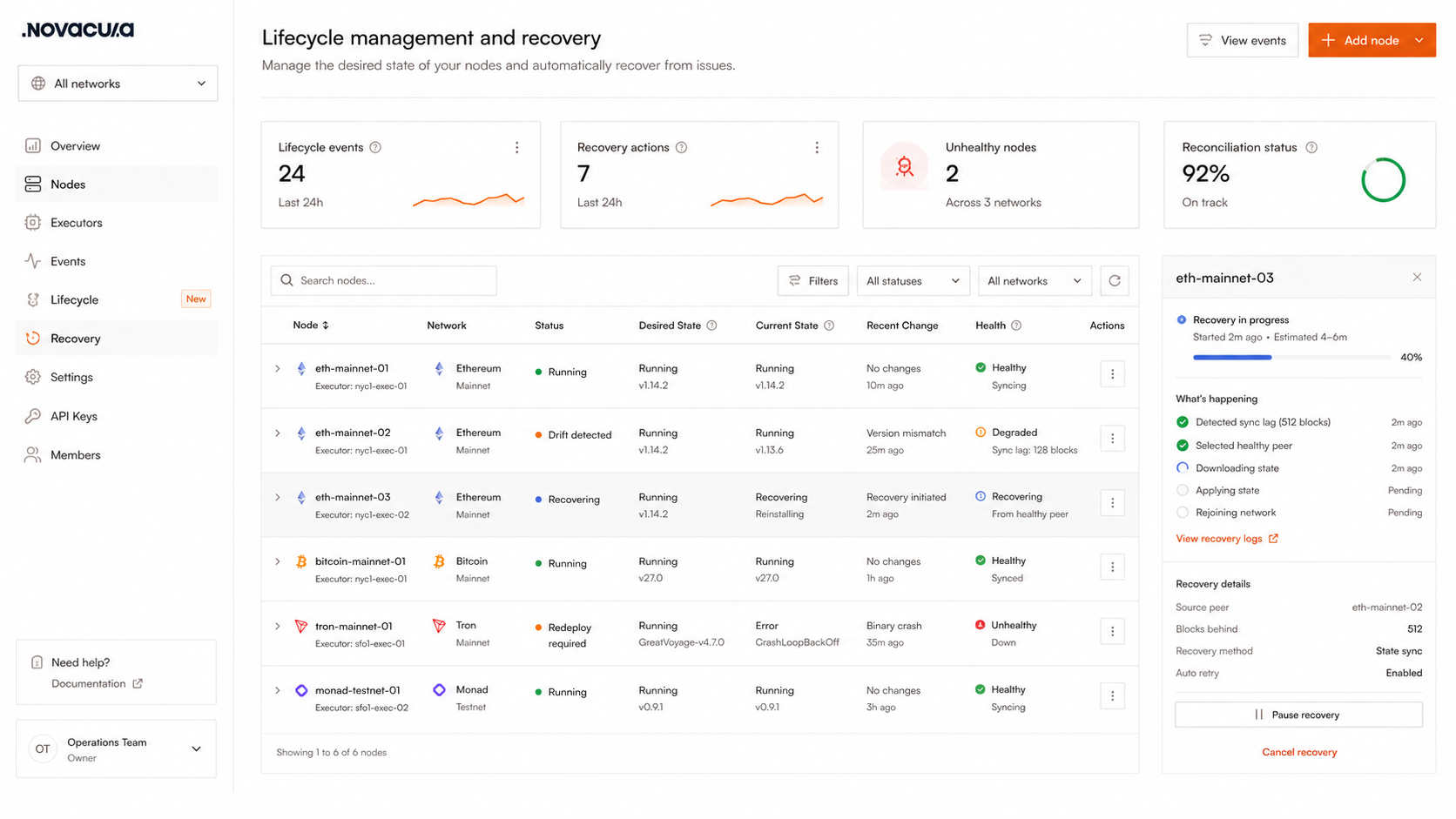
Novacula reconciles desired state against actual node state and surfaces unhealthy or drifted nodes for operational recovery. Supported lifecycle actions depend on the blockchain and client, and some version changes may require redeployment.
- Desired-state reconciliation
- Health and drift detection
- Chain-specific lifecycle operations
Outbound-only. Your perimeter stays closed.
Executors reach out to the control plane on a short interval to fetch work and report status. No inbound management ports are required, and executors can run behind NAT or a firewall. If the control plane is ever unreachable, your nodes keep running and serving RPC — the Hub is a coordinator, not a runtime dependency.
Deploy nodes across supported chains from one place
Deploy supported node types on infrastructure you control. Per-chain adapters handle the binaries, configuration, and client versions for each network.
DevOps FAQs
Answers to common questions about deploying, operating, monitoring, and managing blockchain nodes with Novacula. Talk to our team.
Do I need Kubernetes to use Novacula?
No. The Novacula Agent runs on supported Linux hosts and virtual machines, while the Kubernetes Operator runs inside existing clusters. Both connect to the same control plane, so Agent and Operator deployments can be managed together.
What exactly does the executor send to the control plane?
Executors report operational information such as node status, health, metrics, and selected logs over outbound-only connections. RPC traffic, private keys, blockchain data, and node processes remain within your infrastructure.
How do node upgrades work?
Upgrade behavior depends on the blockchain and client. Supported lifecycle changes are managed through the control plane, while some networks may require redeployment when changing client versions.
Can one executor run nodes for multiple chains?
Yes. An executor can manage multiple supported blockchain nodes when the host has sufficient resources and the selected chains are compatible with that execution environment.
What happens during a hard fork window?
Hard-fork requirements depend on the blockchain and client. Novacula helps operators manage supported version changes and monitor node state from the control plane, while chain-specific upgrade requirements still apply.
What happens if the Novacula Hub becomes unavailable?
Existing nodes continue running and serving RPC. Desired-state changes pause until the executor reconnects to the Hub.
Does RPC traffic pass through Novacula?
No. RPC traffic stays within the infrastructure you control. The executor sends operational status, metrics, and selected logs to the Hub.
Stop maintaining nodes. Start shipping.
Deploy your first node in minutes — on your own infrastructure.
Get started