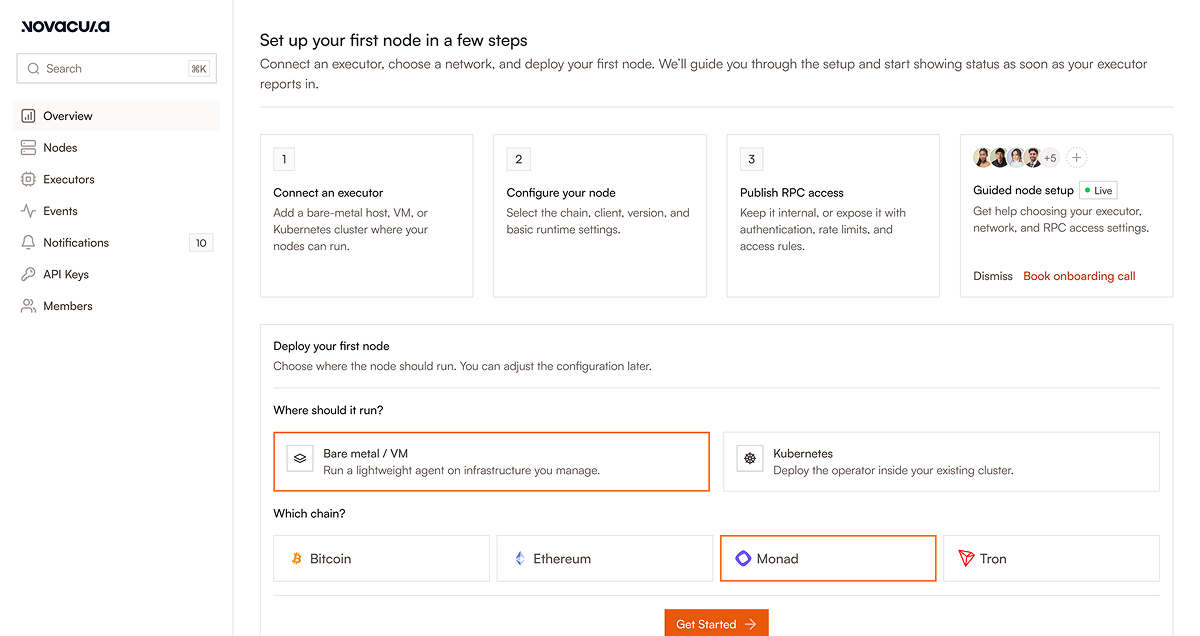
Stop renting the infrastructure your business runs on.
Exchanges, custodians, banks, and infrastructure providers depend on blockchain data. Novacula deploys and manages nodes on infrastructure you control, giving your team direct control over where nodes run and how they are operated.
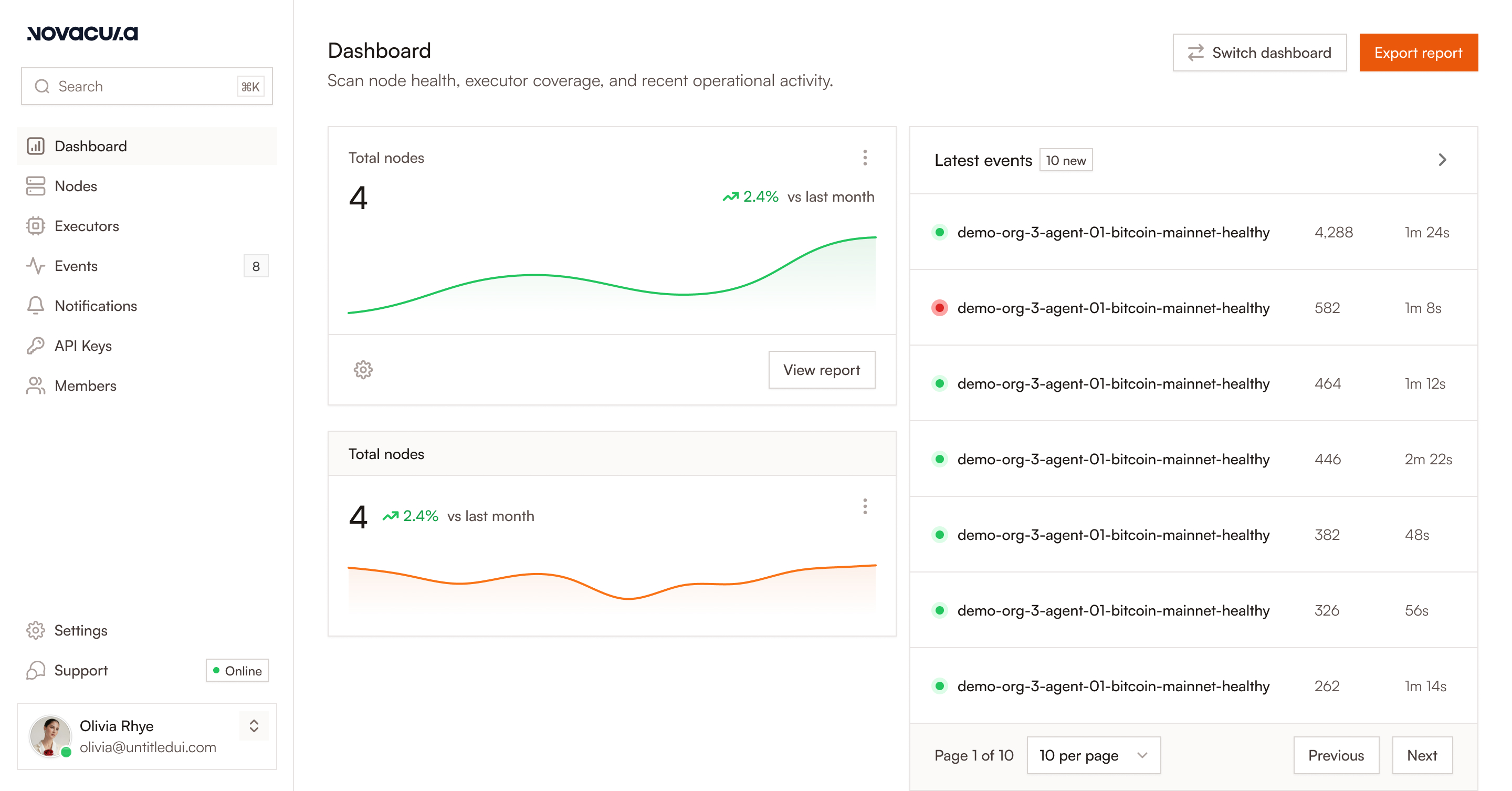
Move beyond per-request RPC billing
Managed RPC services may charge based on requests or usage, which can increase costs as traffic grows. Running nodes on infrastructure you control gives your team a different cost model and more direct control over capacity, configuration, and scaling.
Reduce node operations overhead
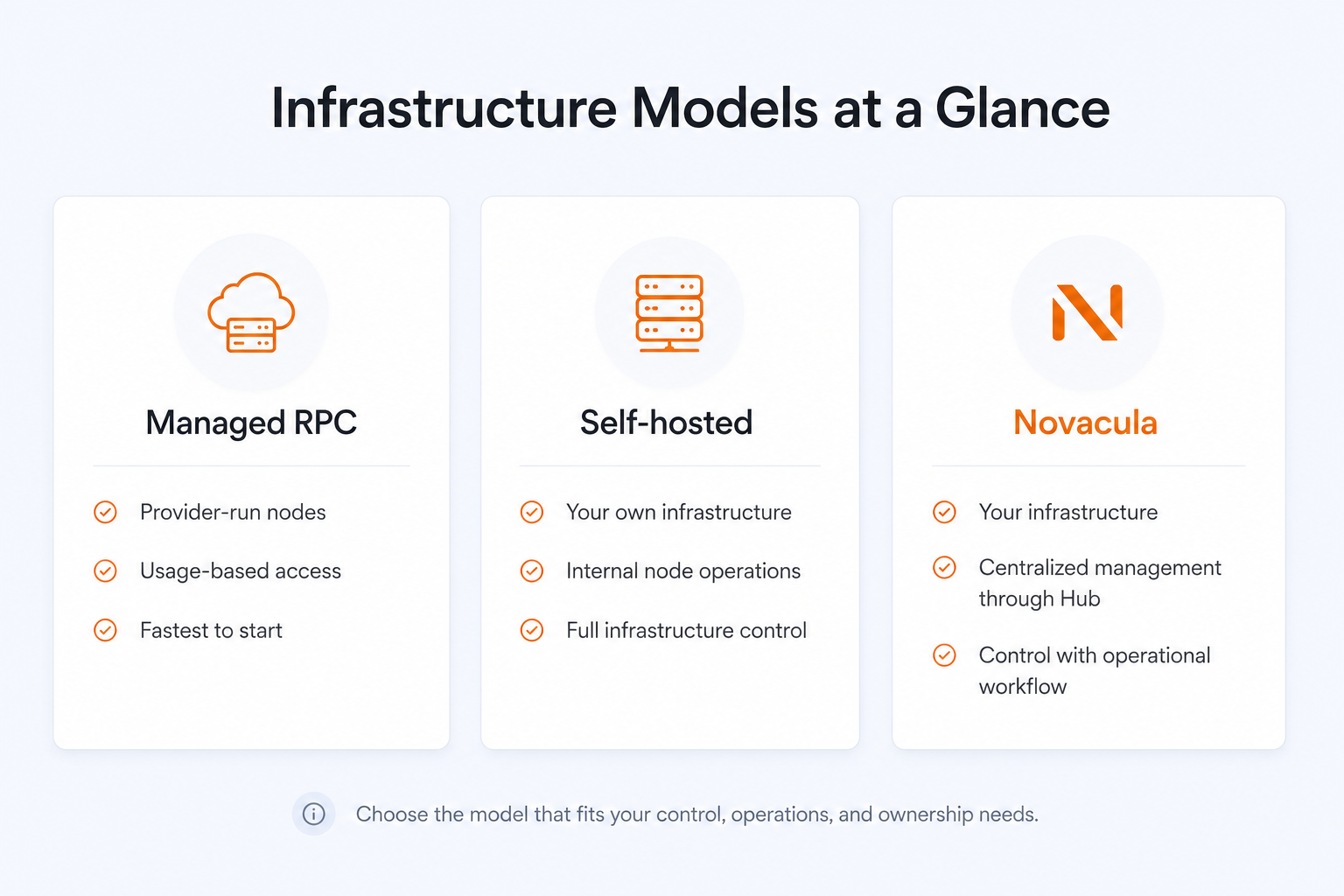
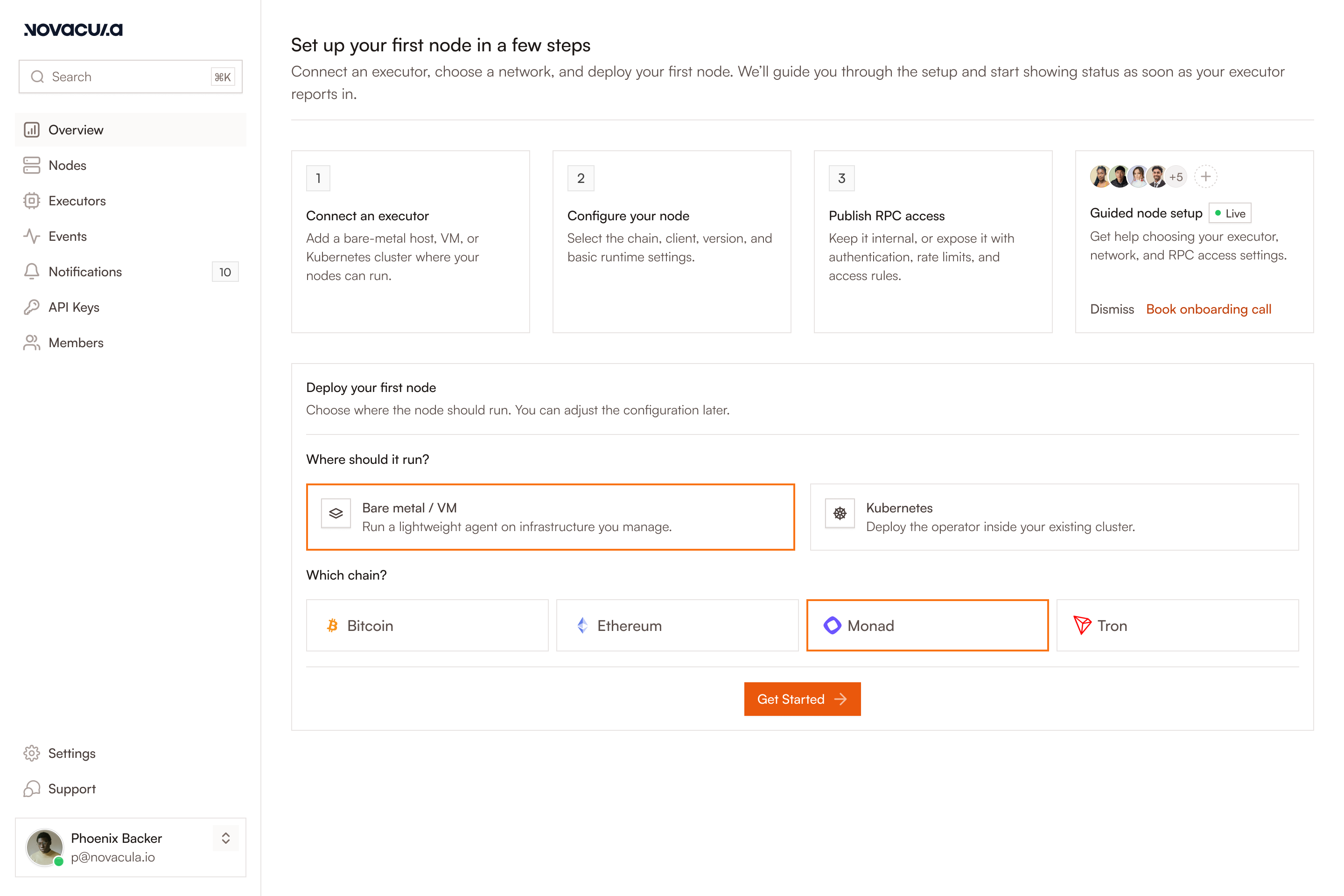
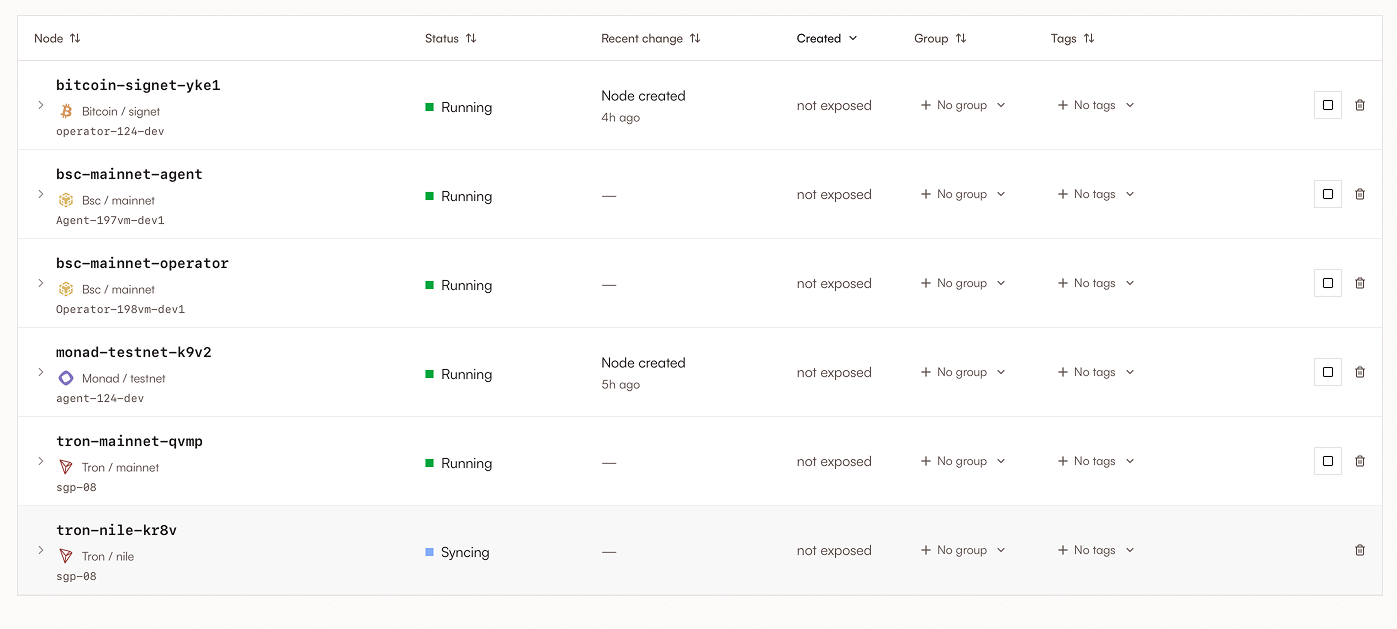
Self-hosting nodes traditionally creates chain-specific operational work. Novacula gives teams one control plane for deploying, monitoring, and managing supported nodes across different chains and environments.
- One workflow across supported chains
- Centralized node monitoring and management
- First node syncing in minutes

Keep your blockchain infrastructure under your control
Novacula coordinates node operations through the Hub while nodes and blockchain data remain on infrastructure you control. Executors connect outbound to report operational status and receive management instructions.
- No custody of private keys or funds
- Blockchain data remains on your infrastructure
- Outbound-only executor connections
- Operational status, metrics, and selected logs sent to Hub
- Nodes remain under your infrastructure control
Diversify, don't gamble
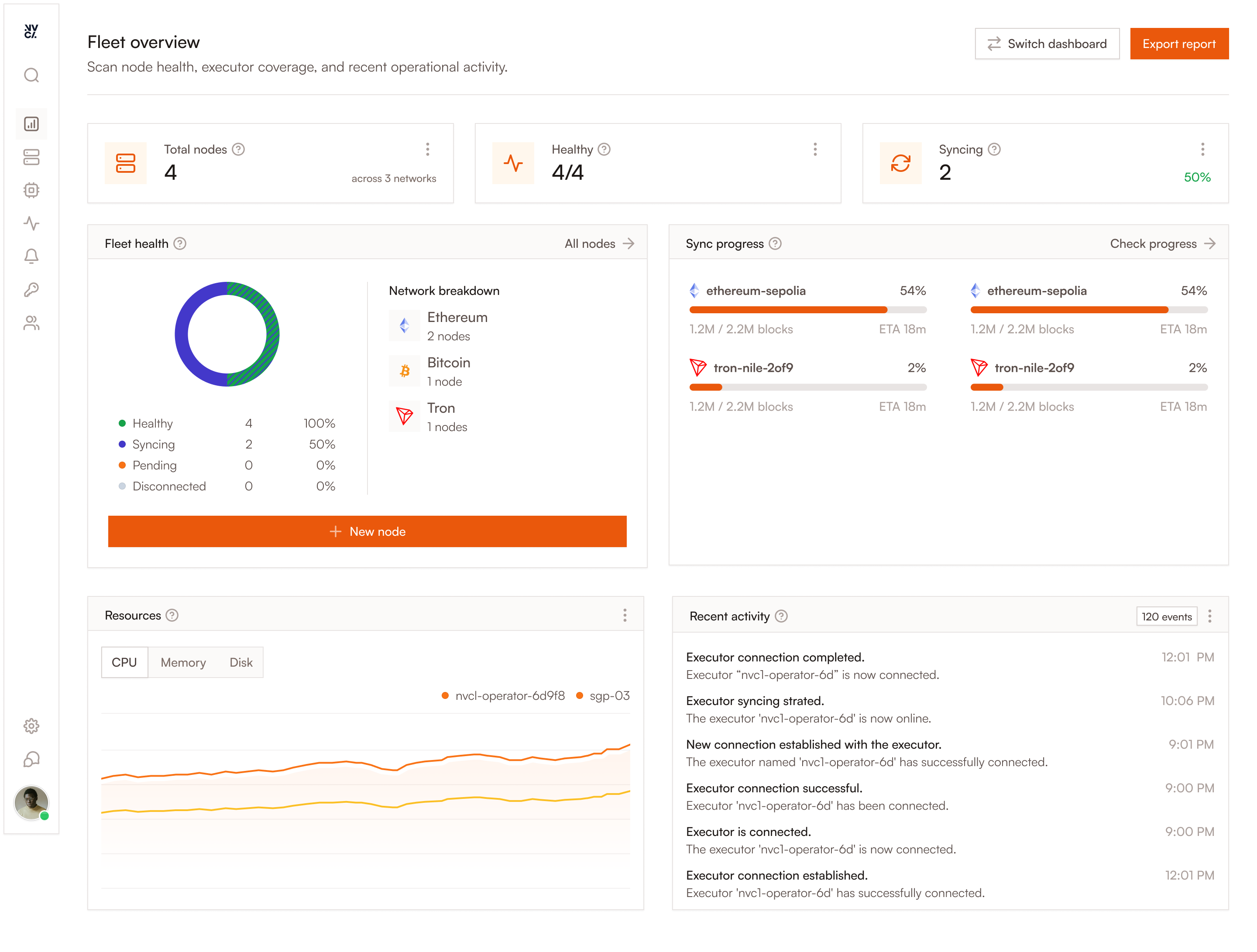
Run supported blockchain nodes through one control plane while keeping workloads on infrastructure you control. Existing nodes continue serving RPC if the Hub is temporarily unavailable, while management changes resume after executors reconnect.
Deploy nodes across supported chains from one place
Run supported blockchain nodes through one workflow while keeping them on infrastructure you control. If the Hub becomes temporarily unavailable, existing nodes continue running and serving RPC, while management changes resume after executors reconnect.
Multi-chain velocity
Adding a supported network follows the same operational workflow in Novacula. Per-chain adapters handle chain-specific binaries, configuration, and resource defaults, so teams can manage supported networks through one control plane.
Web3 Business FAQs
Answers to common questions about running and managing blockchain nodes with Novacula. Can't find what you're looking for? Talk to our team.
Who is Novacula built for?
Novacula is built for teams that need reliable blockchain node infrastructure without making node operations their core product, including exchanges, custodians, financial institutions, staking providers, and infrastructure teams.
Does Novacula hold keys or move funds?
No. Novacula does not custody private keys, seed phrases, signing credentials, or funds. Nodes and blockchain operations remain under your infrastructure control.
How does Novacula support data residency and infrastructure control?
Nodes and blockchain data run on infrastructure you control, allowing your team to choose where workloads are deployed. Executors send operational status, metrics, and selected logs to the Hub for management and monitoring.
What happens if we stop using Novacula?
Your node workloads remain on your infrastructure. Existing nodes can continue running independently of the Hub, while Novacula management and desired-state changes stop when executors are no longer connected.
Can we keep our current RPC provider?
Yes. Novacula does not require you to replace an existing managed RPC provider. Teams can operate their own nodes alongside third-party RPC services when that architecture fits their requirements.
What happens if the Novacula Hub becomes unavailable?
Existing nodes continue running and serving RPC. Management changes pause until executors reconnect to the Hub.
Where can we run Novacula-managed nodes?
Depending on the blockchain, Novacula can manage nodes on supported Linux hosts, virtual machines, or Kubernetes clusters through the Agent or Operator.
Stop maintaining nodes. Start shipping.
Deploy your first node in minutes — on infrastructure you control.
Get started