Self-Hosted Blockchain Nodes: Explained
What self-hosted blockchain nodes are, what it takes to run them, and how node management platforms can simplify deployment, monitoring, upgrades, and ongoing operations.
What is a self-hosted node
A self-hosted blockchain node runs on infrastructure your team controls, such as supported bare-metal hosts, virtual machines, or Kubernetes clusters. Instead of relying entirely on a managed RPC provider, your team controls where the node runs, its blockchain data, configuration, and operations. Node management platforms can centralize deployment, monitoring, and supported lifecycle operations across multiple blockchain networks.
Economics at scale
Managed RPC services may charge by requests or usage. Running your own nodes creates a different cost model based on the infrastructure and management tooling your team uses.
Data sovereignty and compliance
Running nodes on infrastructure you control gives your team more control over where blockchain data is stored and where workloads operate, which can support data-residency and compliance requirements.
Throughput and configuration
Self-hosted nodes give teams direct control over node resources, supported client settings, RPC exposure, and node types available for each blockchain.
Coverage and independence
Running your own nodes can reduce dependence on a single managed RPC provider and gives your team more control over the blockchain infrastructure supporting its applications.
What does running your own nodes actually take?
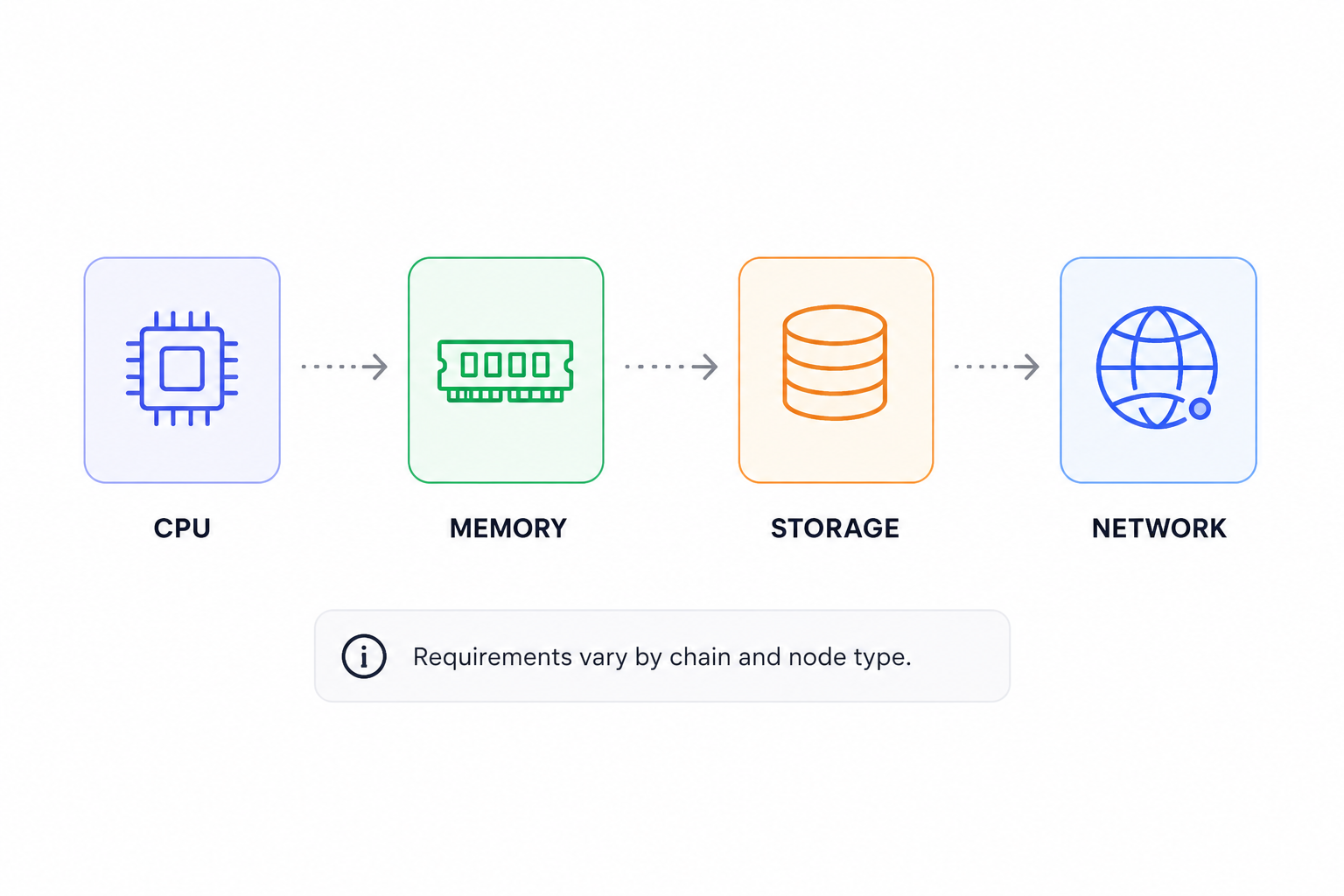
Running blockchain nodes requires sufficient compute, memory, storage, network capacity, and ongoing operational work for synchronization, updates, and monitoring.
Hardware
Hardware requirements vary by blockchain, node type, and client. Check the chain-specific Novacula documentation for current CPU, memory, storage, and runtime requirements.
- CPU and memory requirements vary by chain
- Storage depends on node type and client
- Use current Novacula deployment defaults from the chain documentation

Upgrades & Sync
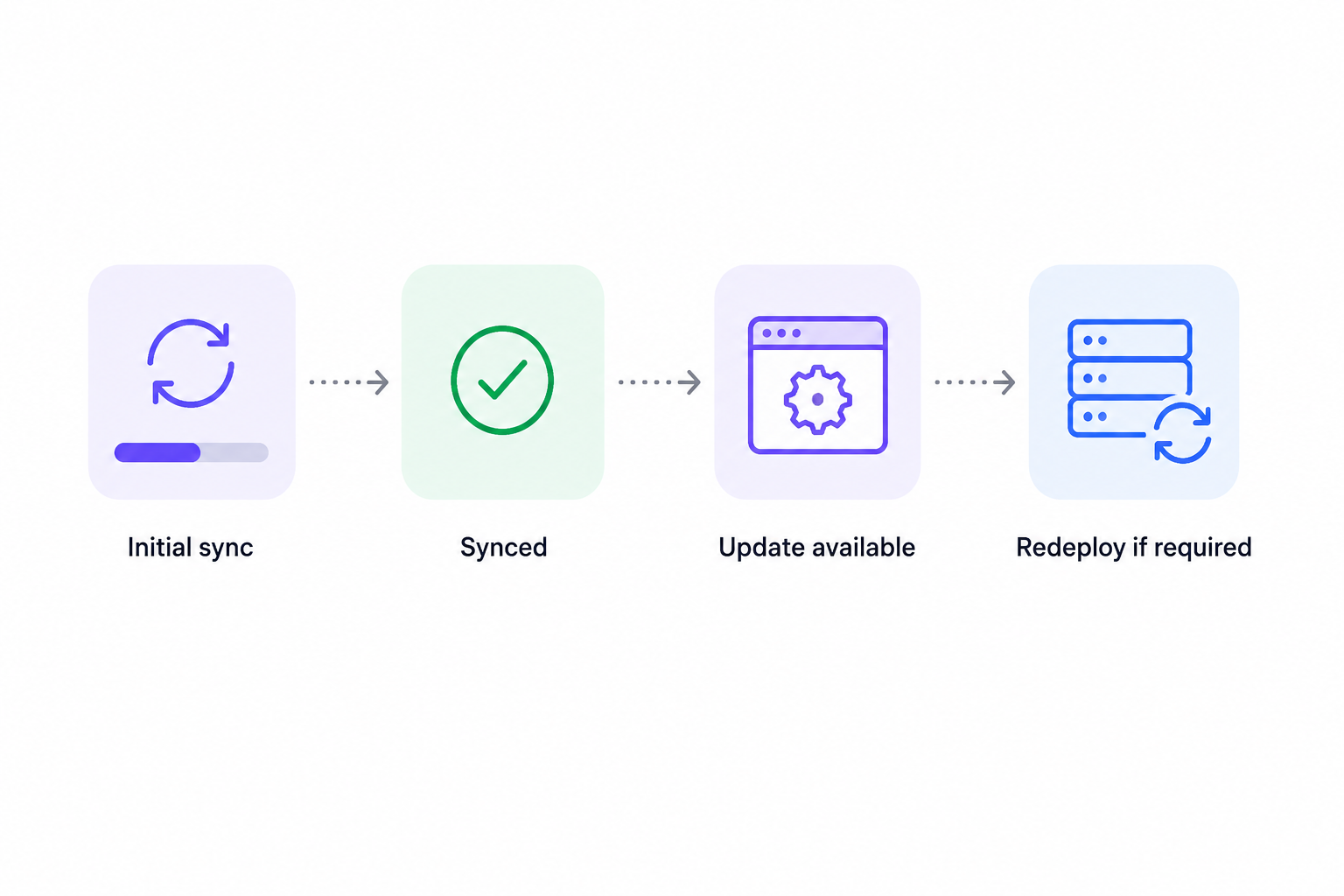
Synchronization and upgrade behavior varies by blockchain, client, node type, and deployment method. Some networks support snapshots or other bootstrap methods, while version changes may require redeployment.
- Sync time varies by chain and node type
- Bootstrap methods depend on the network and client
- Upgrade behavior is chain-specific, and some version changes require redeployment
Manage self-hosted nodes from one control plane
Novacula centralizes deployment, monitoring, configuration, and supported lifecycle operations for blockchain nodes running on infrastructure you control.
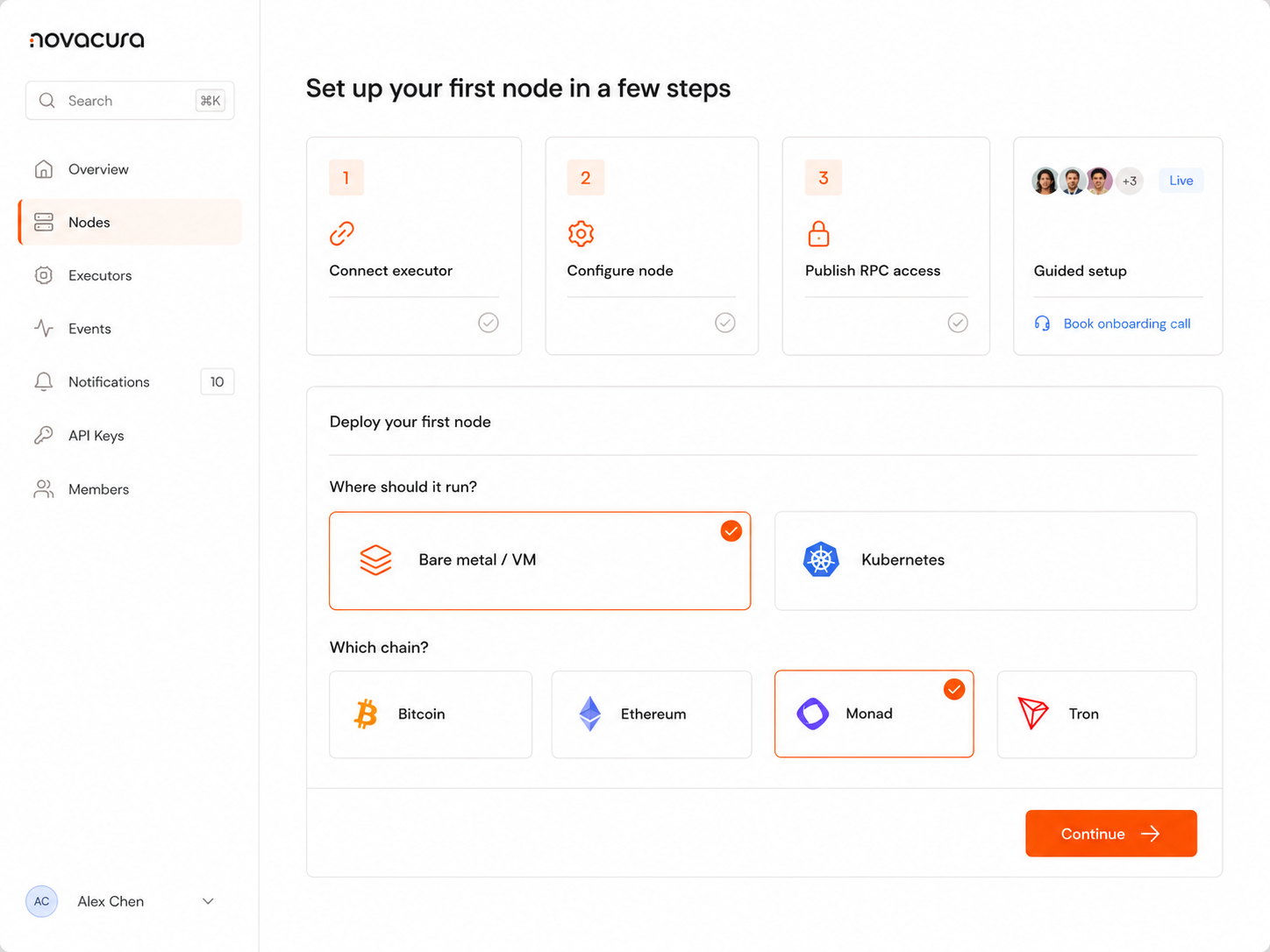
Deploy supported nodes through one workflow
Choose the blockchain, network, supported node type, and client options. Novacula handles the chain-specific binaries, configuration, and deployment settings behind the workflow.
- One workflow across supported chains
- Chain-specific node types and client options
- Bare metal, virtual machines, or Kubernetes where supported
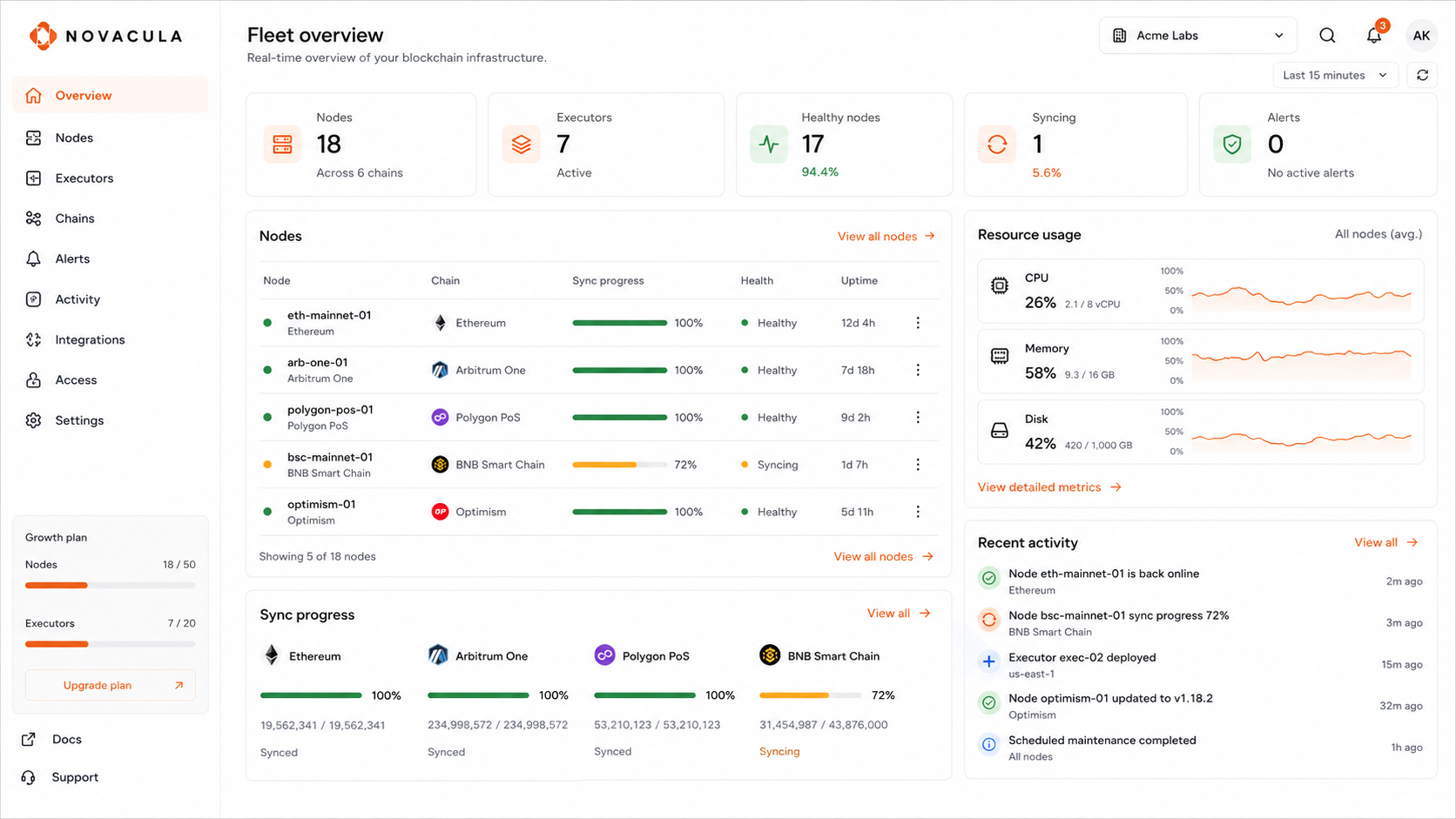
Monitor node health and synchronization
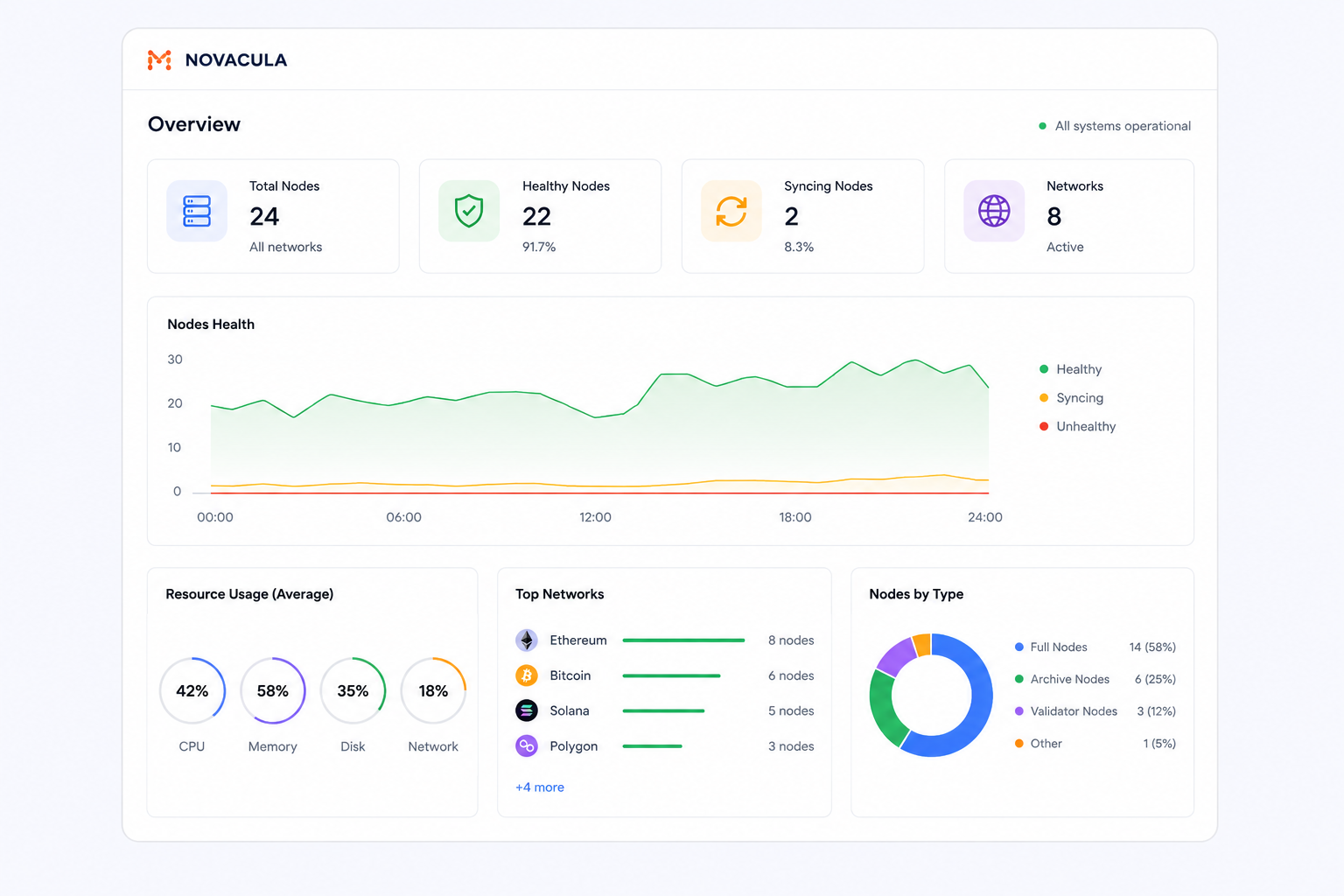
Track node health, synchronization status, block progress, resource usage, metrics, events, and available logs from one control plane.
- Node health and sync visibility
- Resource usage and operational metrics
- Events and available logs in one place
Manage chain-specific lifecycle operations
Use Novacula to manage supported configuration and lifecycle changes from the control plane. Available actions depend on the blockchain and client, and some version changes may require redeployment.
- Supported lifecycle actions from one control plane
- Chain-specific configuration and version handling
- Redeployment where required
Self-Hosted Blockchain Node FAQs
Answers to common questions about running, managing, monitoring, and maintaining self-hosted blockchain nodes. Talk to our team.
What is a self-hosted blockchain node?
A self-hosted blockchain node runs on infrastructure your team controls instead of relying entirely on a managed RPC provider. Your team manages where the node runs, its configuration, blockchain data, and operational environment.
Where can I run self-hosted nodes with Novacula?
Depending on the blockchain, Novacula can manage nodes on supported bare-metal hosts, virtual machines, or Kubernetes clusters through the Agent or Operator.
What hardware do self-hosted blockchain nodes require?
Requirements depend on the blockchain, node type, client, and deployment method. Check the chain-specific Novacula documentation for current CPU, memory, storage, and runtime requirements.
How long does a self-hosted node take to sync?
Sync time varies by blockchain, node type, client, hardware, and available bootstrap methods. Some networks support snapshots or other bootstrap options that can reduce initial synchronization time.
How are self-hosted nodes monitored?
Novacula provides visibility into node health, synchronization status, block progress, resource usage, metrics, events, and available logs from one control plane.
How do upgrades work for self-hosted nodes?
Upgrade behavior depends on the blockchain and client. Supported lifecycle changes can be managed through the control plane, while some version changes may require redeployment.
What happens if the Novacula Hub becomes unavailable?
Existing nodes continue running and serving RPC. Management changes pause until executors reconnect to the Hub.
Can I keep using a managed RPC provider alongside self-hosted nodes?
Can I keep using a managed RPC provider alongside self-hosted nodes?
Stop maintaining nodes. Start shipping
Deploy and manage self-hosted blockchain nodes on infrastructure you control.
Get started