| Infrastructure model | Nodes run on infrastructure your team controls, including bare metal, virtual machines and Kubernetes. | Alchemy operates the underlying infrastructure and provides hosted HTTP and WebSocket API endpoints. | Novacula is designed for teams that want direct control of the node environment; Alchemy removes the need to operate the underlying nodes. |
|---|
| Pricing approach | Core is free during beta; Enterprise pricing is custom. | Alchemy offers Free, Pay As You Go and Enterprise plans. Pay As You Go is billed by Compute Unit usage. | Novacula and Alchemy use different commercial models: Novacula is centered on managed node infrastructure, while Alchemy’s paid API usage scales with consumed Compute Units. |
|---|
| API model | Expose the chain-native RPC interfaces provided by your nodes, including JSON-RPC, WebSocket or gRPC where supported. | Alchemy provides standard JSON-RPC through its Node API, plus higher-level Data APIs, Wallet APIs, Webhooks and other managed services. | Novacula stays closer to the underlying node and its native interfaces, while Alchemy adds a broader managed API layer for application development. |
|---|
| Deployment model | Deploy and manage nodes on customer-controlled bare metal, virtual machines or Kubernetes through one control plane. | Create an Alchemy app, select networks and connect to provider-managed infrastructure through hosted API endpoints. | Novacula gives infrastructure teams control over where nodes run, while Alchemy abstracts node deployment and operations behind a managed service. |
|---|
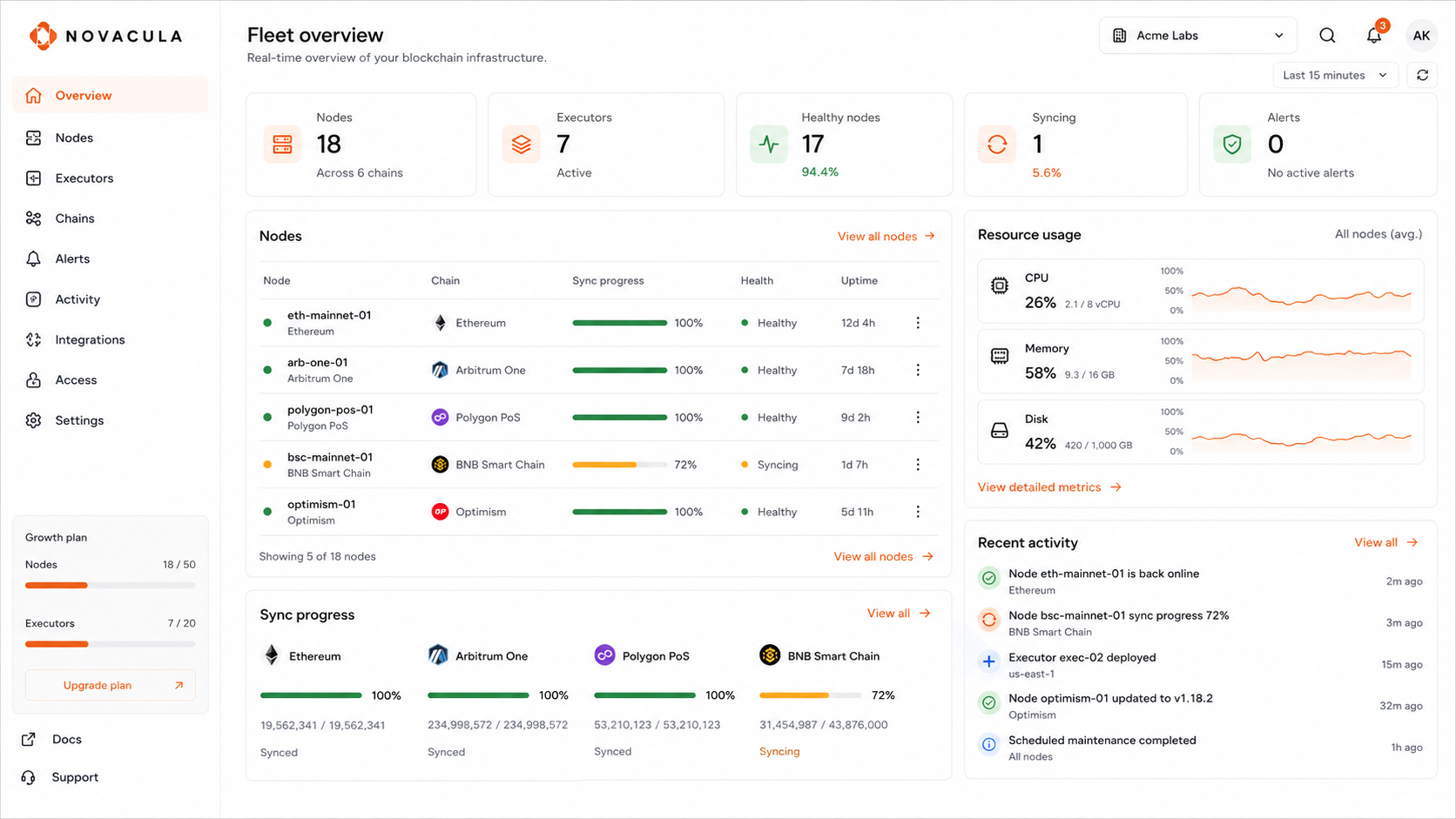
| Operational visibility | Monitor node health, synchronization, peers, resource usage, metrics and selected logs from the control plane. | Alchemy provides dashboard visibility into API requests, errors, response times, usage and account activity. | Novacula focuses on node-level operational visibility, while Alchemy focuses on visibility into requests and activity across its managed API infrastructure. |
|---|