Novacula vs Chainstack Self-Hosted

Novacula and Chainstack Self-Hosted both help teams run blockchain nodes on infrastructure they control. Novacula combines a managed cloud Hub with customer-side Agents and Operators on supported Linux hosts, virtual machines, or Kubernetes. Chainstack Self-Hosted runs its Control Panel and blockchain workloads inside the customer’s Kubernetes environment.

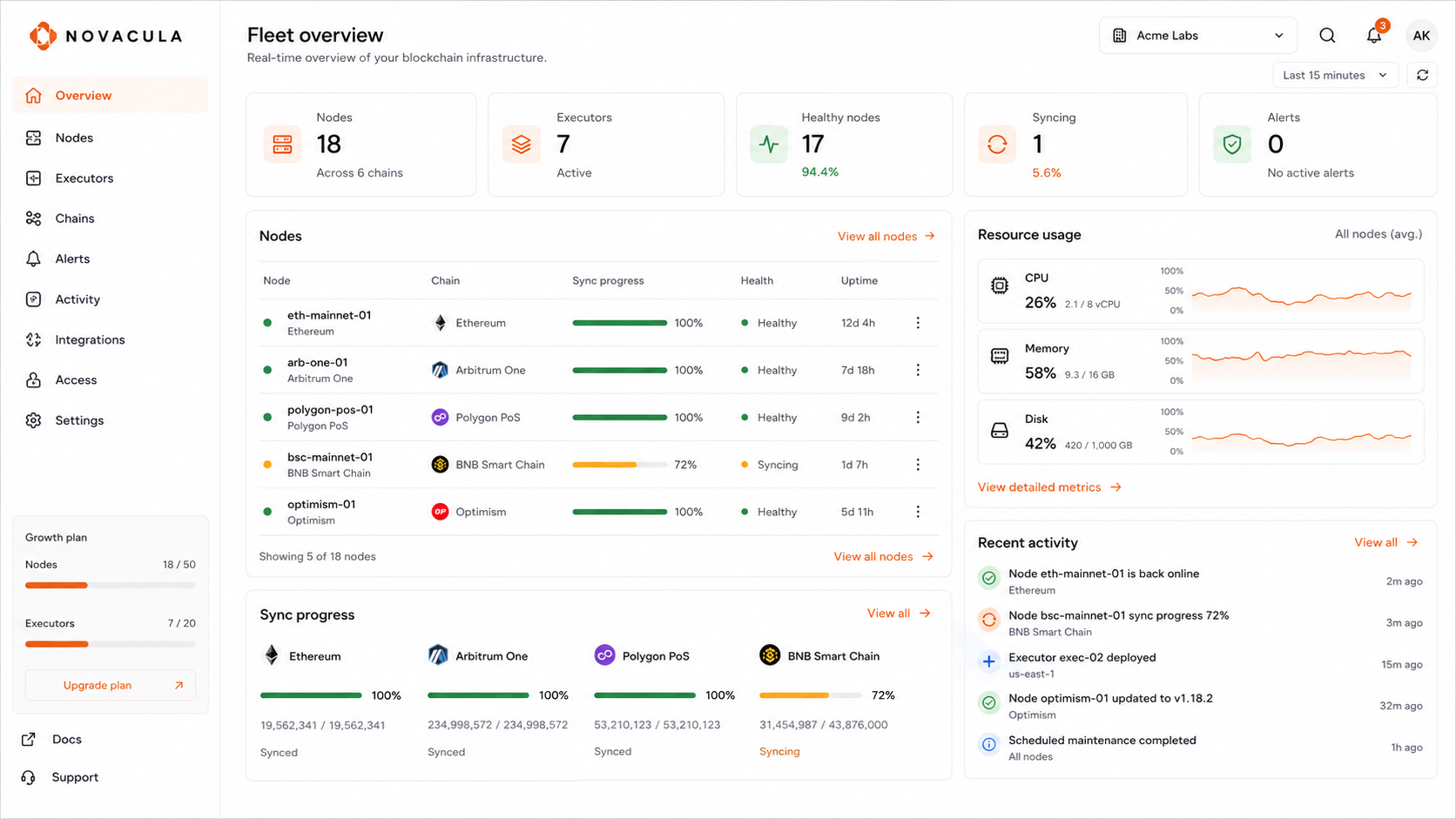
novacula-fleet-overview-dashboard.png

Novacula vs Chainstack Self-Hosted: Compare Deployment and Operations

FeatureNovaculaChainstack Self-HostedWhat this means for you
Control plane architectureNovacula provides a managed cloud Hub, while customer-side Agents and Operators run nodes on supported Linux hosts, virtual machines, or Kubernetes.Chainstack runs its Control Panel, authentication, database, orchestration, and blockchain workloads inside the customer’s Kubernetes environment.Novacula operates the management service, while Chainstack gives the customer responsibility for hosting the complete management layer.
Deployment environmentsUse the Agent on supported Linux hosts and virtual machines, or the Operator in Kubernetes.The Control Panel and blockchain workloads run in Kubernetes, whether the cluster is hosted on dedicated servers, virtual machines, cloud infrastructure, or on-premises hardware.Novacula can manage standalone hosts without requiring Kubernetes. Chainstack uses a Kubernetes-native operating model.
Supported deploymentsNovacula supports multiple blockchain networks, clients, node types, and deployment combinations through chain-specific adapters and executors.Chainstack currently publishes a broader catalog covering 24 protocols across 40 documented network and client configurations.Chainstack has the broader catalog today. Novacula focuses on a consistent operating workflow across its supported chains and deployment environments.
Monitoring modelNode health, synchronization, peers, RPC activity, resource usage, metrics, and recent process logs are available through the Novacula control plane. Available metrics depend on the blockchain client.Chainstack provides an optional integrated observability stack using Grafana, VictoriaMetrics, Alertmanager, and node and Kubernetes exporters.Both provide node-level visibility. Novacula keeps routine deployment, monitoring, and log inspection in one interface, while Chainstack runs its observability stack inside the customer’s cluster.
Operational overheadNovacula operates the Hub. Customers operate their infrastructure, executors, storage, networking, and blockchain workloads.Customers operate the Kubernetes cluster, Control Panel, storage, observability components, upgrades, and blockchain workloads.Novacula reduces the management infrastructure your team must operate. Chainstack provides more direct control with greater operational responsibility.
Control-plane availabilityExecutors connect outbound to the Hub. Existing nodes continue running and serving configured endpoints if the Hub is temporarily unavailable.Management remains available while the customer-operated Kubernetes cluster and Control Panel remain healthy.Novacula separates blockchain runtime availability from temporary Hub availability.

Control plane architecture

Novacula
Novacula provides a managed cloud Hub, while customer-side Agents and Operators run nodes on supported Linux hosts, virtual machines, or Kubernetes.
Chainstack Self-Hosted
Chainstack runs its Control Panel, authentication, database, orchestration, and blockchain workloads inside the customer’s Kubernetes environment.
What this means for you
Novacula operates the management service, while Chainstack gives the customer responsibility for hosting the complete management layer.

Deployment environments

Novacula
Use the Agent on supported Linux hosts and virtual machines, or the Operator in Kubernetes.
Chainstack Self-Hosted
The Control Panel and blockchain workloads run in Kubernetes, whether the cluster is hosted on dedicated servers, virtual machines, cloud infrastructure, or on-premises hardware.
What this means for you
Novacula can manage standalone hosts without requiring Kubernetes. Chainstack uses a Kubernetes-native operating model.

Supported deployments

Novacula
Novacula supports multiple blockchain networks, clients, node types, and deployment combinations through chain-specific adapters and executors.
Chainstack Self-Hosted
Chainstack currently publishes a broader catalog covering 24 protocols across 40 documented network and client configurations.
What this means for you
Chainstack has the broader catalog today. Novacula focuses on a consistent operating workflow across its supported chains and deployment environments.

Monitoring model

Novacula
Node health, synchronization, peers, RPC activity, resource usage, metrics, and recent process logs are available through the Novacula control plane. Available metrics depend on the blockchain client.
Chainstack Self-Hosted
Chainstack provides an optional integrated observability stack using Grafana, VictoriaMetrics, Alertmanager, and node and Kubernetes exporters.
What this means for you
Both provide node-level visibility. Novacula keeps routine deployment, monitoring, and log inspection in one interface, while Chainstack runs its observability stack inside the customer’s cluster.

Operational overhead

Novacula
Novacula operates the Hub. Customers operate their infrastructure, executors, storage, networking, and blockchain workloads.
Chainstack Self-Hosted
Customers operate the Kubernetes cluster, Control Panel, storage, observability components, upgrades, and blockchain workloads.
What this means for you
Novacula reduces the management infrastructure your team must operate. Chainstack provides more direct control with greater operational responsibility.

Control-plane availability

Novacula
Executors connect outbound to the Hub. Existing nodes continue running and serving configured endpoints if the Hub is temporarily unavailable.
Chainstack Self-Hosted
Management remains available while the customer-operated Kubernetes cluster and Control Panel remain healthy.
What this means for you
Novacula separates blockchain runtime availability from temporary Hub availability.

When Novacula May Be a Better Fit

Avoid running the management layer in Kubernetes

Use Novacula’s control plane with customer-side Agents or Operators instead of maintaining the entire management platform inside your own Kubernetes cluster.

Manage standalone hosts directly

Run and manage blockchain nodes on bare-metal servers or virtual machines without first turning those hosts into a Kubernetes environment.

Keep node operations in one control plane

Monitor node health, synchronization, resources and selected logs through the same Novacula control plane used for deployment and lifecycle management.

Simplify Self-Hosted Blockchain Node Operations

Deploy and manage blockchain nodes on infrastructure you control without running the entire management layer inside Kubernetes.

Sign up